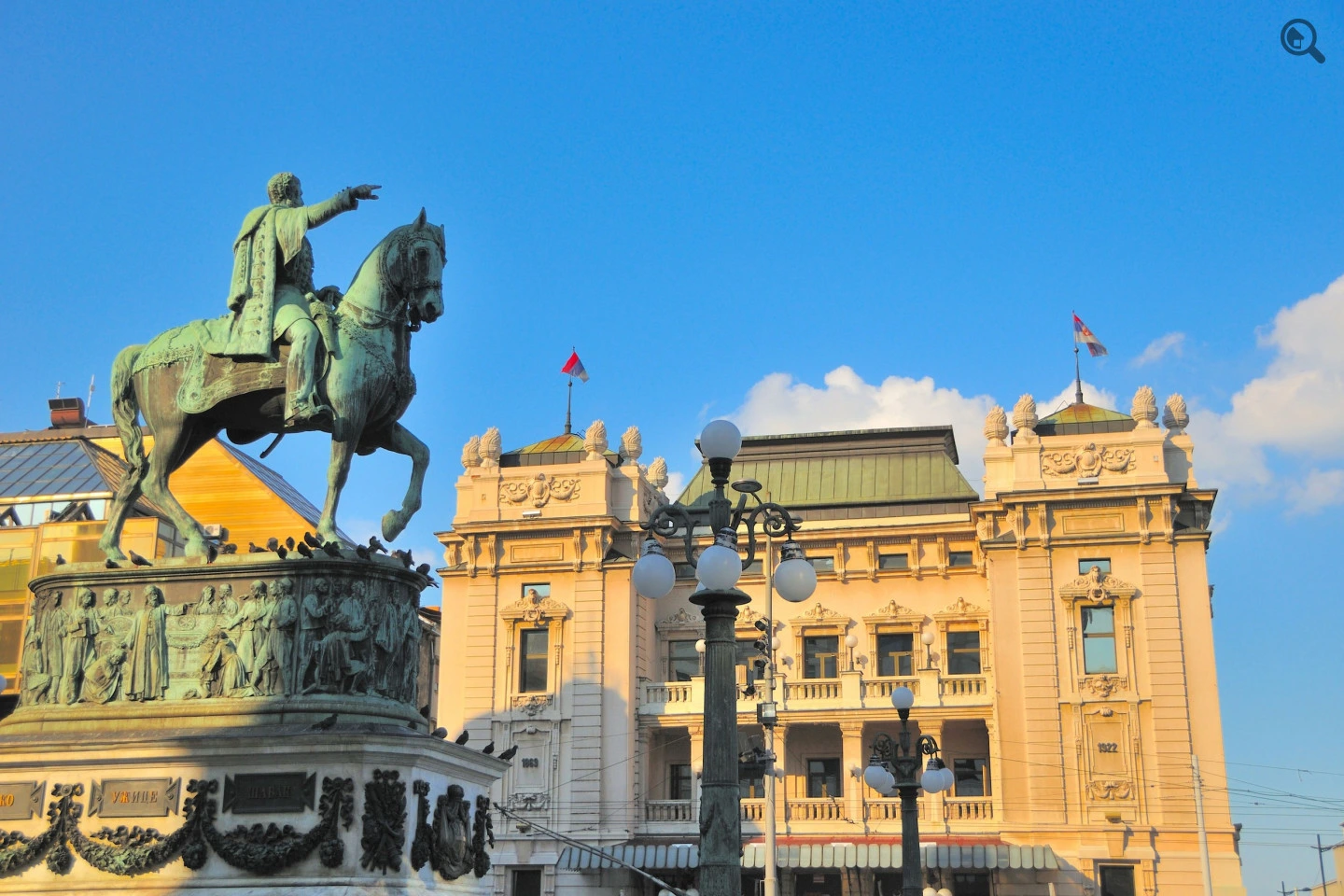
The venue of the competition is not just a location, but a key element of the event's value and prestige. The decision to hold the competition at the National Theatre in Belgrade represents a strategic move that fundamentally redefines its status and significance, placing it at the heart of Serbian cultural history.
Founding and Historical Significance
Founded in 1868 by the historic decision of Prince Mihailo Obrenović, the National Theatre was conceived from the very beginning as the central cultural institution of the modern Serbian state. Built on Republic Square, on the site of the former Stambol Gate, it symbolizes the victory of culture and art. Since its founding, the Theatre has remained a pillar of artistic life, a home to three artistic units of national importance: Opera, Ballet, and Drama.
A Temple of Opera and Drama
For the competition participants, the National Theatre Opera is especially significant, with a repertoire that includes the most important works of world opera literature, from Verdi and Puccini to Mozart and Tchaikovsky. To stand on a stage graced by generations of the greatest Serbian and Yugoslav opera artists, such as Zinka Kunc, Miroslav Čangalović, and Lazar Jovanović himself, is an invaluable experience and an honor.
Equally important is the Drama, which is the foundation of Serbian theatrical identity, a place where works by classics like Jovan Sterija Popović and Branislav Nušić had their premieres and gained eternal fame. This institution is not just a performer, but also a guardian and interpreter of the national dramatic heritage.
The Nation's Educational Center
Throughout history, the National Theatre has also been a key educational center. As early as 1870, just two years after its founding, the first permanent Acting School began its work there, laying the foundations for the systematic education of theatrical artists in Serbia. This tradition of creating and educating new generations of artists makes the Theatre an ideal partner and host for a competition dedicated to young talents.
Due to its immense significance, the National Theatre has been declared a cultural monument of great importance and is a member of the prestigious "European Route of Historic Theatres". For contestants, performing in such an environment is not just a struggle for an award, but an opportunity to become part of the living history of Serbian and European art.